
When something goes wrong at work, the first question is usually “what happened, and what did we do about it?” Good forms make that easy to answer. They give everyone the same steps to follow, and they leave a record you can find later.
You don’t need a binder full of paperwork to get started. Most small workplaces can cover the basics with seven forms.
1. Safety orientation checklist
Use this on an employee’s first day, and again when someone moves into a different role. It lists the things they need to know before they start work: where the exits and first aid kit are, how to report a hazard, who to ask for help, and any equipment they need training on. Have the employee and the person running the orientation both sign it.
2. Hazard report
Give employees a simple way to flag something unsafe, like a loose railing, a blocked exit or a frayed cord. The form should capture what the hazard is, where it is, when it was spotted and who reported it. Add a section for what was done and when it was fixed, so the report closes the loop.
3. Incident and near-miss report
Fill this out as soon as possible after an injury, an illness linked to work, property damage or a close call. Write down the facts: date, time, location, people involved, witnesses and what happened. Near misses matter too. They show you where the next injury could come from, before it happens.
4. Workplace inspection checklist
A regular walk-through helps you catch problems early. A checklist keeps each inspection consistent, so nothing gets skipped because someone was in a hurry. Note what was checked, what needs attention, who is responsible for fixing it and the date it was done.
5. First aid log
Every time first aid is given, record it: who was treated, what for, what was done and who gave the care. Even small cuts and scrapes are worth logging. Over time, the log can show patterns, like a task or a spot in the workplace that keeps causing the same injury.
6. Work refusal record
Employees across Canada have the right to refuse work they believe is unsafe. When it happens, you want a clear, calm process and a written record of each step: what the concern was, who investigated, what was found and how it was resolved. The exact steps depend on where you operate, so check the rules that apply to you.
7. Safety committee or representative meeting minutes
If your workplace has a joint health and safety committee or a safety representative, keep minutes of each meeting. Record who attended, the concerns raised, the actions agreed and who owns each one. Bring open items forward to the next meeting until they are closed.
Tips for making the forms work
- Keep them easy to find. Store blank copies where people can grab them, in print and on a shared drive.
- Fill them out right away. Details fade quickly. A report written the same day is far more useful than one written a week later.
- Close the loop. A form that records a problem but not the fix is only half done.
- Keep them organized. File completed forms by type and date so you can pull them up when you need them.
- Review them now and then. Look at your reports every few months to spot trends and fix the root causes.
Get all seven in one pack
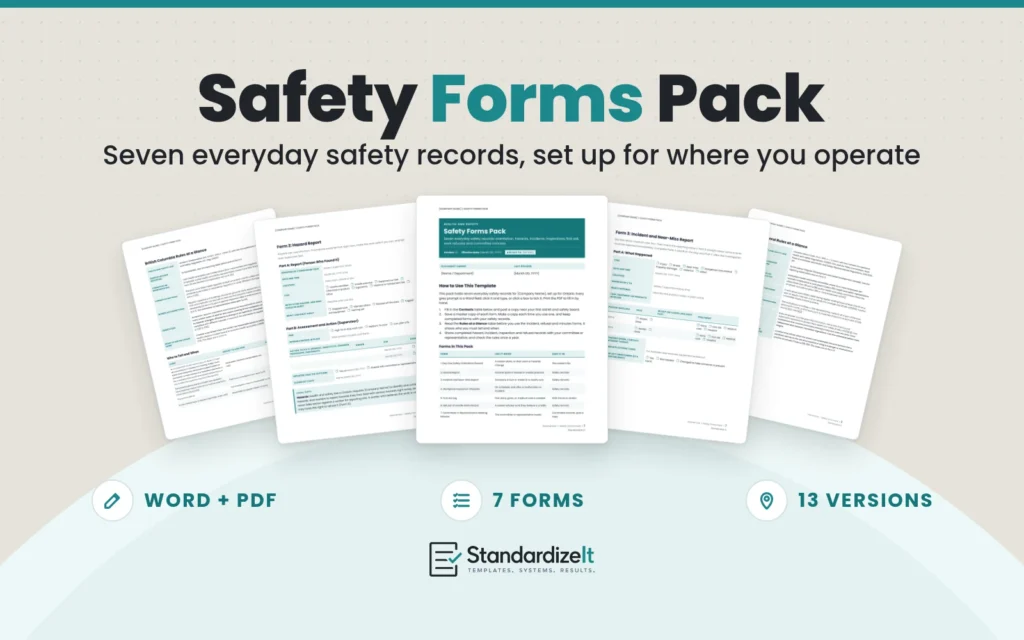
The Safety Forms Pack includes ready-to-use versions of all seven forms, so you can stop building them from scratch and start using them this week.
General information, not legal advice. Health and safety requirements vary by province and territory, so check the rules that apply to your workplace.
By the Standardize It team
